McKinley's 1900 Annual Message to Congress
On December 3, 1900, President William McKinley transmitted his annual message to Congress, reviewing the state of the nation and outlining the administration's priorities for the coming year.
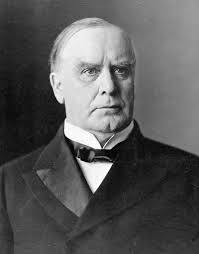
William McKinley (1843–1901) was the 25th President of the United States, serving from 1897 until his assassination in 1901. A Republican, he led the nation through the Spanish-American War and pursued pro-business economic policies including protective tariffs and the gold standard.
McKinley’s presidency marked the United States’ emergence as an international power after victory in the Spanish-American War and the acquisition of overseas territories such as Puerto Rico, Guam, the Philippines, and the annexation of Hawaii. Domestically, he promoted economic stability through the Dingley Tariff and the Gold Standard Act, aligning the federal government with business and industrial interests.
His administration accelerated American overseas expansion, a legacy that generated lasting debate over imperialism and national identity. McKinley’s assassination in 1901 brought Theodore Roosevelt to the presidency and helped usher in a more activist, progressive phase of American governance.
Led the U.S. in the Spanish-American War (1898) and negotiated the Treaty of Paris;Annexed Hawaii and oversaw acquisition of Puerto Rico, Guam and the Philippines;Enacted the Dingley Tariff to raise protective tariffs (1897);Signed the Gold Standard Act (1900) to stabilize currency;Articulated the Open Door Policy promoting equal trade access in China;Assassinated in 1901, succeeded by Theodore Roosevelt
Key highlights and dated events associated with this presidency.
Showing 12 of 99 entries.
On December 3, 1900, President William McKinley transmitted his annual message to Congress, reviewing the state of the nation and outlining the administration's priorities for the coming year.
Incumbent President William McKinley won re-election on Election Day, defeating Democratic nominee William Jennings Bryan and securing a second term with a decisive Electoral College margin.
On September 17, 1900, Filipino forces under General Juan Cailles ambushed and defeated a U.S. expeditionary force at Mabitac in Laguna province, inflicting notable American casualties and forcing a withdrawal.
On September 13, 1900, Filipino insurgents ambushed and defeated a U.S. Army detachment at Pulang Lupa on the island of Marinduque, capturing a number of American soldiers.
A powerful hurricane struck Galveston on September 8, 1900, destroying much of the city and killing an estimated several thousand people, making it the deadliest natural disaster in U.S. history.
A powerful hurricane struck Galveston on September 8, 1900, destroying much of the city and killing an estimated 6,000–8,000 people, making it the deadliest natural disaster in U.S. history.
As Allied relief forces entered Beijing, Empress Dowager Cixi and the Guangxu Emperor abandoned the capital and retreated westward toward Xi'an.
On August 14, 1900, multinational relief forces—among them U.S. Army and Marine units—entered Peking (Beijing) and relieved the besieged foreign legations during the Boxer Rebellion.
On August 6, 1900, allied forces, with U.S. units among them, engaged and routed Qing and Boxer forces at Yangcun, enabling the relief expedition to continue toward Peking.
On August 5, 1900, Eight‑Nation Alliance forces, including U.S. Army contingents, defeated Boxer and Qing troops at Beicang, clearing the route north toward Peking.
On July 14, 1900, international Allied forces—among them American Army and Marine units—captured the city of Tientsin after intense fighting in the Boxer Rebellion campaign.
At the Democratic National Convention in Kansas City, William Jennings Bryan was formally nominated for president with Adlai E. Stevenson chosen as his running mate.