Roosevelt extends Lend-Lease aid to the Soviet Union
In the wake of Germany's invasion, Roosevelt authorized the extension of Lend-Lease assistance to the Soviet Union, permitting U.S. war materiel to be supplied to the Soviet war effort.
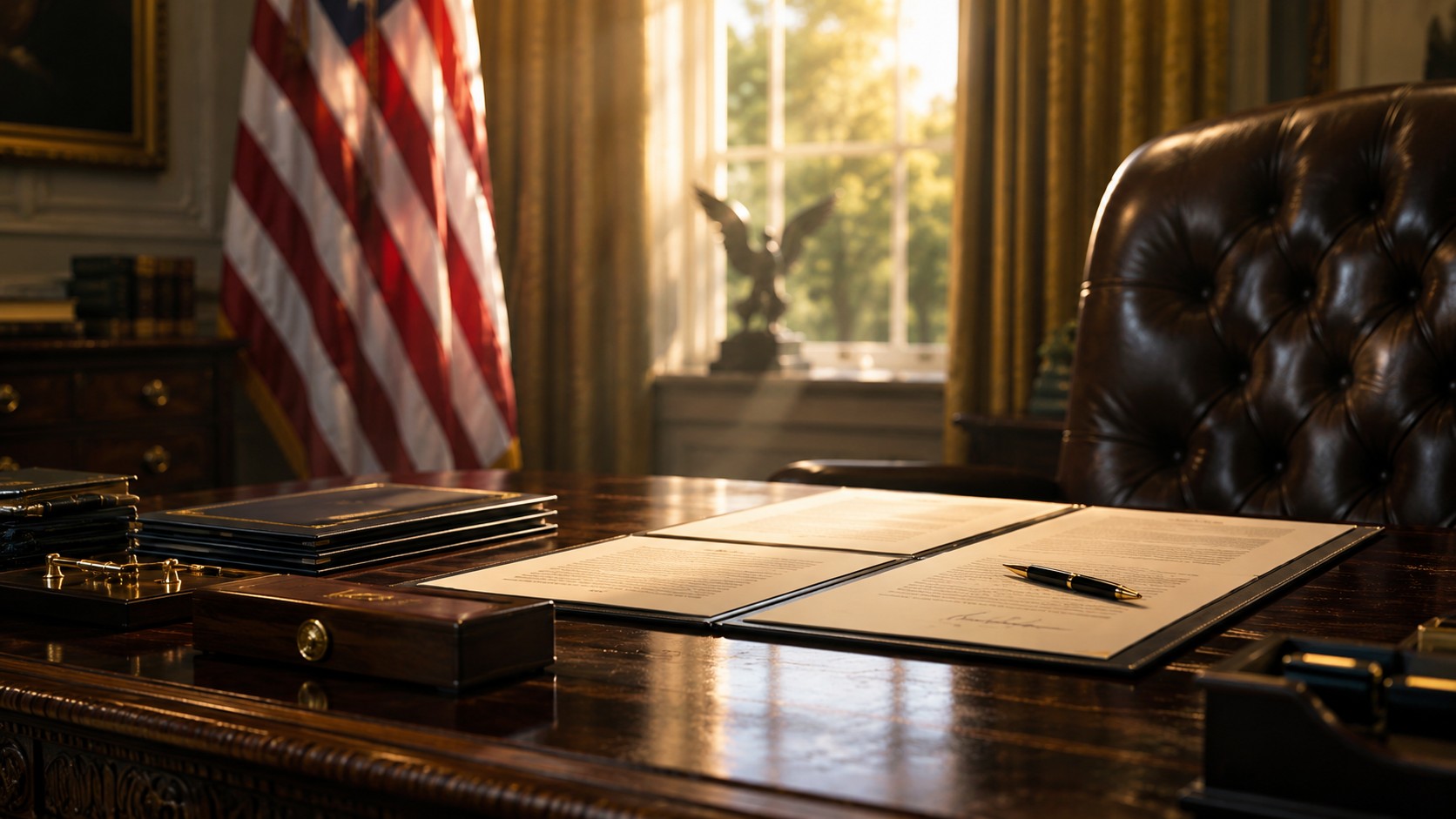
Franklin D. Roosevelt (1882–1945) was the 32nd President of the United States, serving from March 4, 1933, to April 12, 1945. A Democrat, he led the nation through the Great Depression and most of World War II.
Roosevelt reshaped the federal government's role in the economy through the New Deal, creating programs and institutions such as Social Security, the FDIC, and large-scale public works to relieve unemployment and stabilize finance.
He also guided the United States through World War II, overseeing mobilization, Lend-Lease, and Allied cooperation; his four-term presidency expanded the scope and influence of the executive branch and left a lasting global and domestic legacy, though some initiatives, like the 1937 court-packing plan, provoked controversy.
Implemented New Deal reforms including the Social Security Act; Stabilized banking and created the FDIC and SEC; Established large public works programs (WPA, CCC, TVA); Backed Lend-Lease and led U.S. mobilization in World War II; Elected to four terms, reshaping presidential precedent; Proposed 1937 Supreme Court reorganization (court-packing)
Key highlights and dated events associated with this presidency.
Showing 12 of 415 entries.
In the wake of Germany's invasion, Roosevelt authorized the extension of Lend-Lease assistance to the Soviet Union, permitting U.S. war materiel to be supplied to the Soviet war effort.
President Franklin D. Roosevelt issued Executive Order 8802, prohibiting racial and ethnic discrimination in the national defense industry and establishing the Fair Employment Practices Committee (FEPC).
On June 22, 1941 Nazi Germany invaded the Soviet Union in Operation Barbarossa, and President Franklin D. Roosevelt issued a public statement condemning the attack and expressing U.S. sympathy for the Soviet government.
On May 21, 1941, the German U-boat U-69 stopped and sank the unarmed American merchant ship SS Robin Moor in the South Atlantic, and President Franklin D. Roosevelt instructed the State Department to issue a formal protest to Germany and publicly condemned the attack.
President Franklin D. Roosevelt signed the Lend-Lease Act (Public Law 77-11), authorizing the U.S. to lend or lease arms and other defense materials to nations deemed vital to U.S. defense.
Franklin D. Roosevelt was sworn in for an unprecedented third term as president and delivered his third inaugural address to the nation and Congress.
In his 1941 State of the Union address, President Franklin D. Roosevelt outlined the 'Four Freedoms'—freedom of speech, freedom of worship, freedom from want, and freedom from fear—as fundamental goals for the world.
In a nationwide radio fireside chat, President Franklin D. Roosevelt urged expanded U.S. armaments production to support Britain and famously said the United States must be the "arsenal of democracy."
On December 16, 1940, the United States Electoral College met and cast its ballots, formally awarding Franklin D. Roosevelt a third presidential term.
Incumbent President Franklin D. Roosevelt was re-elected on November 5, 1940, defeating Republican challenger Wendell Willkie to become the first U.S. president elected to a third term.
On October 16, 1940, American men aged 21–35 completed the first nationwide registration required by the Selective Training and Service Act of 1940, the country’s first peacetime draft.
FDR signed the Selective Training and Service Act, instituting the United States' first peacetime conscription and requiring registration of men aged 21–35.