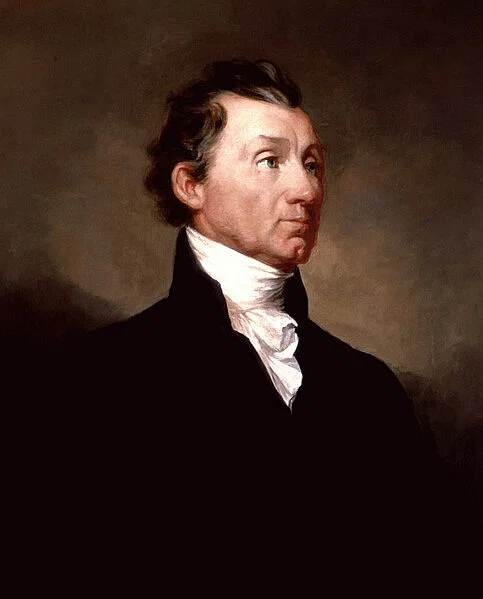
The POTUS Timeline
President #5

James Monroe

James Monroe (1758–1831) was the fifth President of the United States, serving from 1817 to 1825. A leading figure of the Democratic-Republican Party, he is best known for the Monroe Doctrine and guiding a period of national unity and westward expansion.

Legacy Summary

Monroe left a lasting mark on U.S. foreign policy: his 1823 Monroe Doctrine warned European powers against new colonial ventures in the Americas and asserted a growing American sphere of influence. He also secured Florida through the Adams–Onís Treaty and settled boundary issues with Britain, reinforcing U.S. territorial claims.

Domestically, Monroe presided over the Era of Good Feelings, a time of relative political harmony after the Federalist decline, but his administration also faced rising sectional tensions over slavery highlighted by the Missouri Compromise. His presidency advanced national infrastructure and westward settlement while leaving complex challenges over union and slavery for future leaders.

Notable Actions

Proclaimed the Monroe Doctrine (1823) asserting opposition to European colonization; Negotiated the Adams–Onís Treaty (1819) securing Florida for the United States; Presided over the Missouri Compromise (1820) managing sectional tensions over slavery; Guided the Era of Good Feelings, marked by one-party dominance and nationalistic sentiment; Concluded the Convention of 1818 with Britain, establishing the 49th parallel and joint Oregon occupation; Appointed John Quincy Adams as Secretary of State, shaping U.S. foreign policy

Timeline Entries

Key highlights and dated events associated with this presidency.

Showing 12 of 46 entries.

Browse full timeline
1820 presidential election voting period begins
November 1, 1820 James Monroe
Election / Transition

1820 presidential election voting period begins

On November 1, 1820, the legally authorized period for states to choose presidential electors opened, beginning the national election that would result in James Monroe's near-unanimous re-election.

Missouri Compromise enacted into law
March 6, 1820 James Monroe
Legislation

Missouri Compromise enacted into law

President James Monroe approved the Missouri Compromise, the congressional package that allowed Missouri to pursue statehood while admitting Maine as a free state and barring slavery north of latitude 36°30′ in the Louisiana Purchase territory.

Illinois admitted as the 21st state
December 3, 1818 James Monroe
Legislation

Illinois admitted as the 21st state

On December 3, 1818, Congress admitted Illinois to the Union and President James Monroe completed the admission process, making Illinois the 21st state.

Anglo‑American Convention of 1818 signed
October 20, 1818 James Monroe
Foreign Policy

Anglo‑American Convention of 1818 signed

The United States and Great Britain signed the Anglo‑American Convention (Convention of 1818), establishing the 49th parallel from the Lake of the Woods to the Rocky Mountains and agreeing to joint occupation of the Oregon Country for ten years, along with fishing and navigation arrangements.