Andrew Jackson seizes Pensacola, Spanish Florida
U.S. forces under General Andrew Jackson occupied Pensacola, capturing Spanish-held forts and ejecting British agents and allied Seminole leaders.
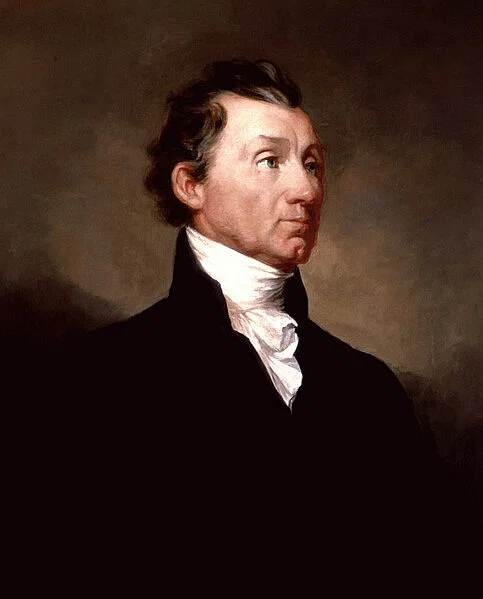
James Monroe (1758–1831) was the fifth President of the United States, serving from 1817 to 1825. A leading figure of the Democratic-Republican Party, he is best known for the Monroe Doctrine and guiding a period of national unity and westward expansion.
Monroe left a lasting mark on U.S. foreign policy: his 1823 Monroe Doctrine warned European powers against new colonial ventures in the Americas and asserted a growing American sphere of influence. He also secured Florida through the Adams–Onís Treaty and settled boundary issues with Britain, reinforcing U.S. territorial claims.
Domestically, Monroe presided over the Era of Good Feelings, a time of relative political harmony after the Federalist decline, but his administration also faced rising sectional tensions over slavery highlighted by the Missouri Compromise. His presidency advanced national infrastructure and westward settlement while leaving complex challenges over union and slavery for future leaders.
Proclaimed the Monroe Doctrine (1823) asserting opposition to European colonization; Negotiated the Adams–Onís Treaty (1819) securing Florida for the United States; Presided over the Missouri Compromise (1820) managing sectional tensions over slavery; Guided the Era of Good Feelings, marked by one-party dominance and nationalistic sentiment; Concluded the Convention of 1818 with Britain, establishing the 49th parallel and joint Oregon occupation; Appointed John Quincy Adams as Secretary of State, shaping U.S. foreign policy
Key highlights and dated events associated with this presidency.
Showing 10 of 46 entries.
U.S. forces under General Andrew Jackson occupied Pensacola, capturing Spanish-held forts and ejecting British agents and allied Seminole leaders.

Following court-martials overseen by General Andrew Jackson during his 1818 operations in Spanish Florida, Alexander Arbuthnot was hanged and Robert Ambrister was shot on April 27, 1818, for aiding Seminole resistance.
Mississippi was admitted to the Union on December 10, 1817, becoming the 20th state.
President James Monroe sent his first annual message to Congress outlining his administration's recommendations on internal improvements, the public debt, military and naval preparedness, and Native American affairs.
The United States and Great Britain signed the Rush–Bagot Agreement, negotiated by Richard Rush and Charles Bagot, to limit naval armaments on the Great Lakes and Lake Champlain.
Monroe appointed John C. Calhoun to lead the War Department at the start of his presidency.
Monroe named William Wirt to serve as U.S. Attorney General early in his administration.
On March 5, 1817, President James Monroe named John Quincy Adams to serve as his Secretary of State.
Daniel D. Tompkins was sworn in as Vice President of the United States on March 4, 1817.
James Monroe was sworn in as the fifth President of the United States in Washington, D.C., and delivered his inaugural address outlining his vision for national unity and policy priorities.