Electoral College meets and casts votes confirming Andrew Jackson’s reelection
State electors met and cast their Electoral College ballots, awarding Andrew Jackson a decisive majority in the 1832 presidential election.
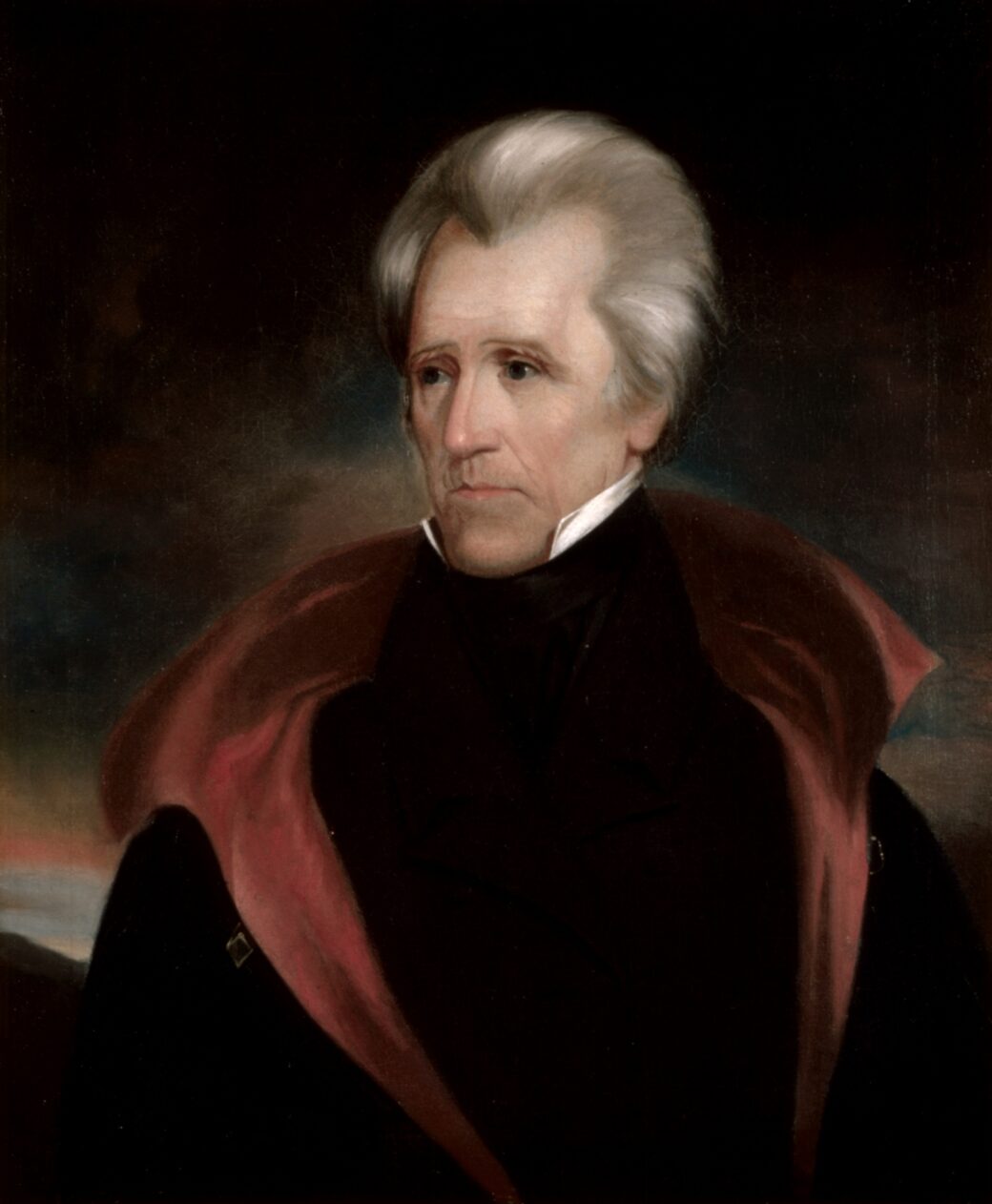
Andrew Jackson (1767–1845) was the seventh President of the United States, serving from 1829 to 1837. A founder of the Democratic Party, he was known for his populist style and strong use of executive power.
Jackson reshaped the presidency into a more powerful, populist office, using the veto, patronage, and direct appeals to voters to influence policy. He led the Bank War, asserted federal authority during the Nullification Crisis, and expanded the role of the executive branch.
His administration enacted the Indian Removal Act, leading to the forced relocation of Native American nations and the Trail of Tears, which remains a major moral and historical controversy. Historians view his legacy as influential but deeply contested for its democratic expansions alongside significant human costs.
Led U.S. forces to victory at the Battle of New Orleans (1815); Helped found the Democratic Party and promoted Jacksonian democracy; Defeated recharter of the Second Bank of the United States (Bank War); Signed the Indian Removal Act (1830), leading to forced relocations; Confronted the Nullification Crisis and asserted federal authority (1832–33); Expanded presidential power through frequent use of the veto and patronage
Key highlights and dated events associated with this presidency.
Showing 12 of 97 entries.
State electors met and cast their Electoral College ballots, awarding Andrew Jackson a decisive majority in the 1832 presidential election.

On November 24, 1832, a South Carolina state convention passed the Ordinance of Nullification, declaring the federal Tariffs of 1828 and 1832 null and void within the state and forbidding their collection after February 1, 1833.
A state convention met in Charleston to consider objections to the federal tariffs and moved toward declaring them null and void within South Carolina.
On November 2, 1832, numerous states opened polling as part of the national presidential election contest between incumbent Andrew Jackson and challenger Henry Clay.
On October 20, 1832, U.S. commissioners and Chickasaw chiefs signed the Treaty of Pontotoc Creek, by which the Chickasaw ceded their remaining lands in Mississippi in exchange for lands west of the Mississippi and compensation.
U.S. Army regulars and militia engaged and routed Sauk leader Black Hawk's band at the Bad Axe River, resulting in heavy Native American casualties and scattering survivors.
President Jackson signed the Tariff of 1832, which lowered some duties but fell short of Southern demands for deeper reductions.
President Andrew Jackson signed the Tariff of 1832, a congressional law that modestly reduced rates established by the Tariff of 1828 but retained protective duties.
President Andrew Jackson issued a formal veto of the bill to recharter the Second Bank of the United States.
President Andrew Jackson issued a veto of the congressional bill to recharter the Second Bank of the United States.
On May 21–23, 1832 the first Democratic National Convention met in Baltimore and on May 23 formally nominated incumbent President Andrew Jackson for a second term and Martin Van Buren for vice president.
Delegates of the Democratic Party met in Baltimore on May 21 to begin the party's first formal national nominating convention, which ran through May 23.