The POTUS Timeline
President #33

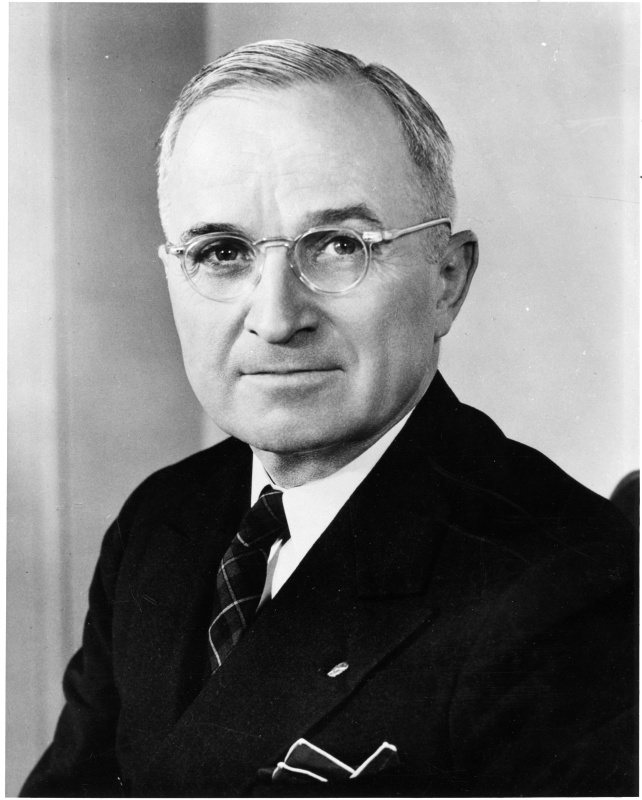
Harry S. Truman

Harry S. Truman (1884–1972) was the 33rd President of the United States, serving from April 12, 1945 to January 20, 1953. A Democrat, he assumed the presidency after Franklin D. Roosevelt's death and guided the nation through the end of World War II and the early Cold War.

Legacy Summary

Truman reshaped America's postwar role, moving the nation from global war to Cold War leadership through the Marshall Plan, the Truman Doctrine, the Berlin Airlift, and the creation of NATO while confronting crises such as the Korean War.

On the domestic front he promoted the Fair Deal and took historic steps on civil rights, notably issuing Executive Order 9981 to desegregate the armed forces; his plainspoken leadership and decisive choices left a complex but enduring legacy that gained greater respect over time.

Notable Actions

Assumed the presidency in 1945 and guided the transition from World War II to peacetime; Authorized use of atomic weapons against Japan (Hiroshima and Nagasaki); Articulated the Truman Doctrine and enacted the Marshall Plan to contain Soviet expansion; Supported the Berlin Airlift and helped establish NATO; Recognized the State of Israel in 1948; Issued Executive Order 9981 to desegregate the armed forces and led the U.S. during the Korean War (1950–1953)

Timeline Entries

Key highlights and dated events associated with this presidency.

Browse full timeline