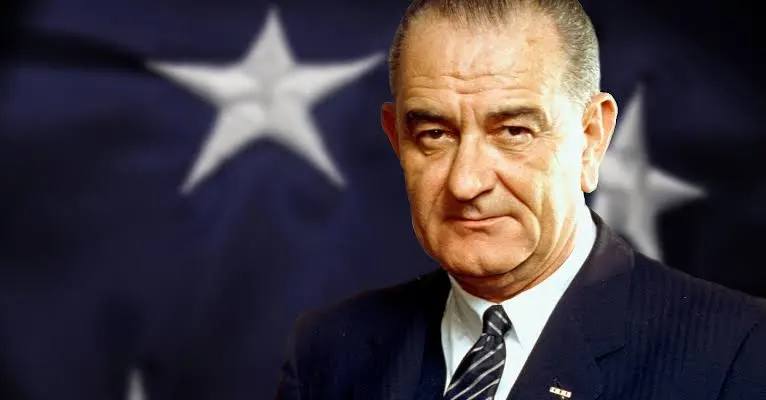
Johnson Signs the Voting Rights Act
The Voting Rights Act strengthened federal protection of voting rights, especially in the South.
Lyndon B. Johnson, a Democrat from Texas, became president after John F. Kennedy's assassination in 1963 and served until 1969. He pursued an ambitious domestic agenda while presiding over a major escalation of the Vietnam War.
Johnson’s domestic agenda, known as the Great Society, expanded civil rights, health care, education, and anti-poverty programs, producing landmark laws such as the Civil Rights Act, the Voting Rights Act, Medicare, and Medicaid.
His decision to escalate U.S. military involvement in Vietnam eroded public support and overshadowed many of his achievements, leaving a complex legacy that reshaped civil rights, social policy, and debates over U.S. foreign intervention.
Signed the Civil Rights Act (1964) and Voting Rights Act (1965); Created Medicare and Medicaid (1965); Launched the Great Society and War on Poverty initiatives; Escalated U.S. military involvement in the Vietnam War; Enacted the Immigration and Nationality Act (1965)
Key highlights and dated events associated with this presidency.
The Voting Rights Act strengthened federal protection of voting rights, especially in the South.
Johnson signed landmark civil rights legislation outlawing discrimination in public life.