
Lyndon B. Johnson Delivers 1965 State of the Union Address
Johnson delivered the 1965 State of the Union, laying out his Great Society agenda and urging Congress to take action on poverty, education, and civil rights.
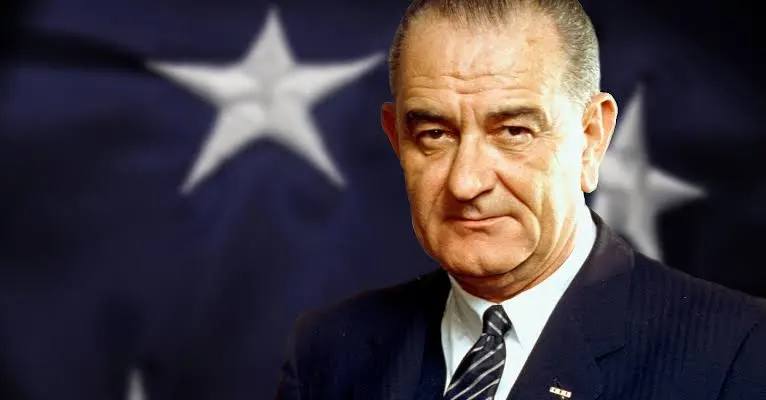
Lyndon B. Johnson, a Democrat from Texas, became president after John F. Kennedy's assassination in 1963 and served until 1969. He pursued an ambitious domestic agenda while presiding over a major escalation of the Vietnam War.
Johnson’s domestic agenda, known as the Great Society, expanded civil rights, health care, education, and anti-poverty programs, producing landmark laws such as the Civil Rights Act, the Voting Rights Act, Medicare, and Medicaid.
His decision to escalate U.S. military involvement in Vietnam eroded public support and overshadowed many of his achievements, leaving a complex legacy that reshaped civil rights, social policy, and debates over U.S. foreign intervention.
Signed the Civil Rights Act (1964) and Voting Rights Act (1965); Created Medicare and Medicaid (1965); Launched the Great Society and War on Poverty initiatives; Escalated U.S. military involvement in the Vietnam War; Enacted the Immigration and Nationality Act (1965)
Key highlights and dated events associated with this presidency.
Showing 12 of 216 entries.
Johnson delivered the 1965 State of the Union, laying out his Great Society agenda and urging Congress to take action on poverty, education, and civil rights.

On December 14, 1964, the presidential electors met in their respective states and cast Electoral College votes overwhelmingly for incumbent President Lyndon B. Johnson and Vice President Hubert H. Humphrey.
On November 3, 1964, incumbent President Lyndon B. Johnson defeated Republican Barry Goldwater, receiving about 61.1% of the popular vote and 486 electoral votes to Goldwater's 52.
The Johnson campaign aired the influential TV spot 'Confessions of a Republican,' featuring a Republican-sounding narrator urging voters to reject Barry Goldwater and support Lyndon Johnson.
On October 16, 1964, the People's Republic of China detonated its first atomic bomb (Project 596) at the Lop Nur test site in Xinjiang.
On October 14, 1964, after Nikita Khrushchev was ousted as Soviet leader, the Johnson administration issued a public statement acknowledging the leadership change and called for a calm reassessment of U.S.-Soviet relations.
The Johnson presidential campaign aired the controversial 'Daisy' television advertisement on network television, showing a young girl and a countdown to a nuclear explosion as a warning about Barry Goldwater.
Johnson signed the Food Stamp Act, creating a permanent federal program to provide food-purchasing assistance to low-income Americans.
On August 27, 1964, the Republican National Convention in San Francisco formally nominated Senator Barry Goldwater for president, and Goldwater delivered his acceptance speech.
The Republican National Convention convened in San Francisco to formally begin the party's process of nominating its 1964 presidential ticket.
On August 20 President Johnson signed the Economic Opportunity Act of 1964, creating the Office of Economic Opportunity and launching anti‑poverty programs such as Job Corps and VISTA.
After Congress passed it on August 7, President Lyndon B. Johnson signed the Gulf of Tonkin Resolution, formally approving the measure that authorized him to take military action in Southeast Asia.